


GymTok vs. Real Health: 7 Things Young Men Should Know
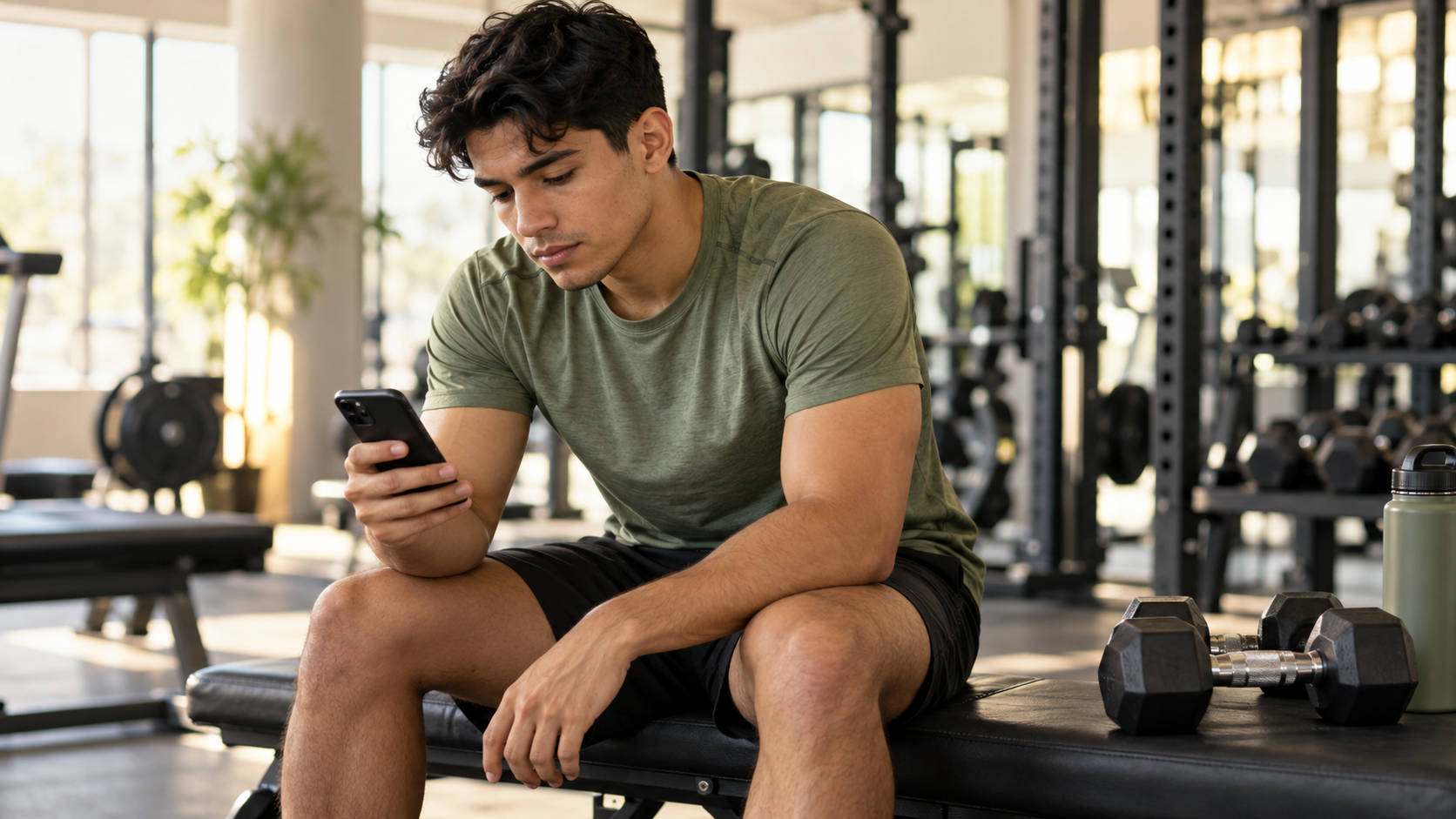
Muscle gains, protein shakes and transformation videos dominate fitness feeds. Here’s how to use GymTok without letting it define your health or your worth.
GymTok can offer workout inspiration, but a muscular appearance does not tell you whether someone’s routine is healthy. For young men, a balanced approach includes strength training, cardiovascular activity, adequate nutrition, sleep and a healthy relationship with food and body image.
Your feed might show you how someone trains. It cannot tell you everything about their health.
What is GymTok?
GymTok is the fitness community on TikTok, where creators share lifting routines, meal plans, supplement recommendations and physique transformations. It can make exercise feel accessible and introduce beginners to a community.
It can also put muscular bodies at the center of constant comparison. A June 2026 preprint analyzing 2,210 GymTok videos found that videos depicting greater muscularity and content rated by experts as potentially more harmful to body image received higher engagement. Supplement- and steroid-related videos received the highest harm ratings.
The study is preliminary and does not prove that watching GymTok causes a mental health disorder. It does raise questions about which fitness messages attract attention online. arxiv.org
1. Bigger muscles are one part of fitness
Wanting to build muscle is a valid goal. But a routine focused entirely on your physique can leave out other important movement.
For adults, the CDC recommends at least 150 minutes of moderate-intensity aerobic activity, or 75 minutes of vigorous activity each week, plus muscle-strengthening exercise on at least two days. These are public health guidelines, rather than a personalized bodybuilding program. CDC
Try this: Alongside lifting, make room for brisk walking, cycling, swimming or a sport you enjoy. Choose goals you can measure through what your body can do, such as completing a longer walk or improving your lifting technique.
2. Protein matters, but you do not need a supplement collection
Protein supports muscle repair and growth. According to the NIH Office of Dietary Supplements, athletes commonly need approximately 1.2–2.0 grams per kilogram of body weight daily. That range is intended for athletic training; it is not a universal requirement for every young man.
Protein powders can help fill a dietary gap, but many people can meet their needs through food. Performance supplements cannot replace an adequate diet. Consumer
For Hispanic households, that conversation can include familiar foods: eggs, fish, chicken, milk, beans and lentils. Your food culture can belong in your fitness routine.
Try this: Before buying another powder, consider whether your regular meals provide enough food and variety to support your activity.
3. Creatine and SARMs are very different products
An influencer’s supplement stack may put several products on the same shelf. Their evidence and risks can differ substantially.
Creatine has evidence for improving performance during repeated, short bursts of intense activity, including weightlifting.
That does not mean every supplement containing creatine, or every combination of ingredients, has been shown to be safe and effective. NIH recommends discussing performance supplements with a healthcare professional, particularly for teenagers, people taking medications or those with medical conditions. Consumer
SARMs, or selective androgen receptor modulators, are unapproved drugs marketed for muscle growth. The FDA advises against using them and warns of serious risks, including liver damage and increased risk of heart attack or stroke. FDA
Try this: Treat “legal,” “research use only” and “influencer approved” as marketing language, not evidence of safety.
4. Sleep deserves a place in your training plan
A workout schedule that regularly crowds out sleep needs adjusting.
The CDC recommends seven or more hours nightly for adults ages 18–60 and eight to ten hours for teenagers ages 13–17. Sleep quality matters, too: spending enough time in bed does not always mean you are getting restorative sleep. CDC
Try this: Protect a regular sleep window with the same intention you bring to scheduling workouts. Persistent sleep problems or daytime exhaustion deserve a conversation with a healthcare professional.
5. “Discipline” can sometimes hide distress
Eating disorders affect men, too. In boys and young men, concerns can center on becoming more muscular or lean, rather than simply losing weight. Research describes patterns involving rigid eating, excessive exercise and muscle-enhancing behaviors. PubMed
Pay attention when:
- Missing a workout causes intense guilt or anxiety.
- Food rules make it difficult to eat with friends or family.
- Checking your body repeatedly takes over your day.
- Training or dieting begins interfering with school, work or relationships.
These experiences do not establish a diagnosis. They are reasons to seek support. NIMH emphasizes that eating disorders are serious, treatable illnesses and that early treatment matters. National Institute of Mental Health (NIMH)
You can care about fitness and ask for help at the same time.
6. Evaluate the creator before following the advice
Use these questions as an editorial filter for your feed:
- What are their qualifications? A transformation photo does not establish expertise.
- What evidence do they provide? Look for research relevant to the claim.
- Are they selling something? A discount code is a reason to examine the recommendation carefully.
- Do they acknowledge individual differences? Advice should account for experience, age and health.
- How does their content affect you? Notice whether you leave feeling informed or increasingly inadequate.
A useful creator should help you make better decisions, not make you feel dependent on their next product.
7. Set goals beyond how you look
Try keeping a progress list that includes:
- Skills or movements you are learning.
- Activities you enjoy enough to repeat.
- A routine that fits your budget and schedule.
- Time spent moving with friends.
- Whether fitness leaves room for meals, rest and relationships.
Appearance goals can be part of that list. They do not need to occupy every line.
Frequently asked questions
Can GymTok be useful for beginners?
Yes, as a source of ideas. Evaluate the creator’s qualifications and verify health claims before copying a routine or buying a product. Consider qualified coaching when learning unfamiliar lifts.
Do young men need supplements to build muscle?
Supplements are optional tools. NIH explains that some can support specific performance goals, but they cannot substitute for an adequate diet, and many ingredient combinations have not been studied sufficiently. Consumer
When should body-image concerns prompt professional help?
Seek support when thoughts about your body, food or exercise cause significant distress or interfere with everyday life. You do not need to wait until a problem becomes severe to discuss it with a healthcare or mental health professional. National Institute of Mental Health (NIMH)
Healthy Vibras takeaway: Let your fitness feed introduce possibilities. Build your routine around your own health, abilities and life.
Sources
- CDC: Adult Physical Activity Guidelines
- NIH: Dietary Supplements for Exercise and Athletic Performance
- FDA: SARMs Among Teens and Young Adults
- CDC: About Sleep
- NIMH: Eating Disorders—What You Need to Know
- Research review: Eating Disorders in Adolescent Boys and Young Men
- 2026 preprint: Muscularity, Engagement and Body Image Risk on GymTok