

9+ Latines In Medicine Who Changed The Field Forever
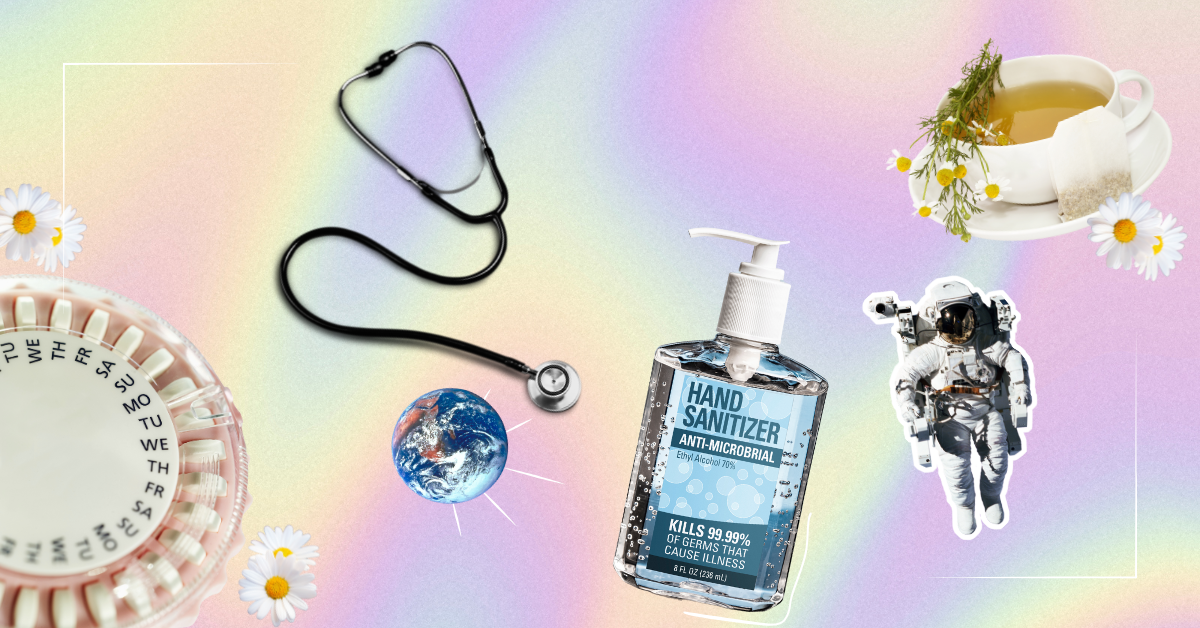
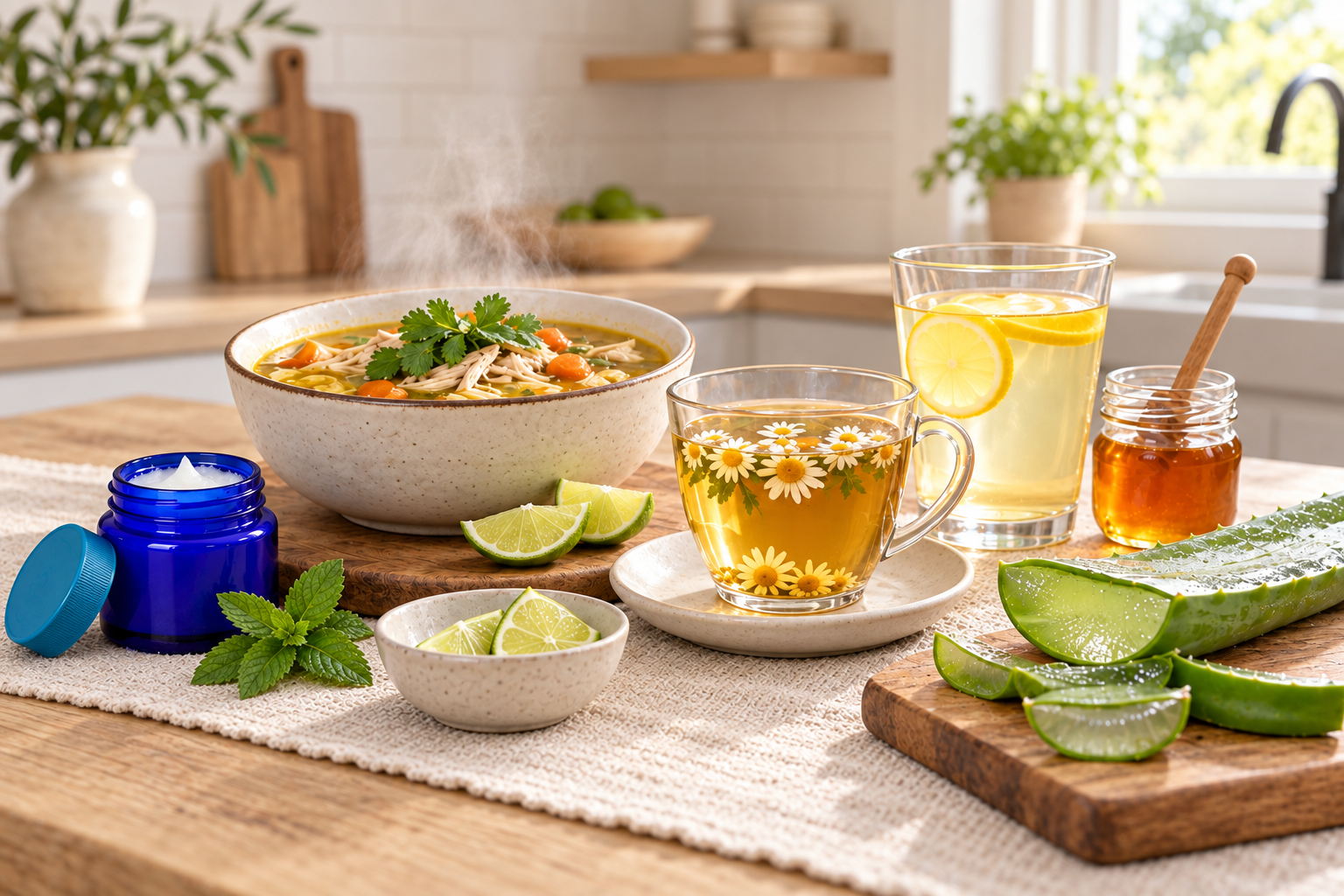
Latines have always had a complex relationship with science. In many of our households, healing didn’t come in a prescription bottle—it came from a parent’s hands, a pot of caldo, or the familiar scent of Vicks VapoRub. We grew up believing that strength, not science, would get us through. Doctor visits were rare, and medication was often a last resort. Ancestral remedies and oral traditions shaped how we cared for our bodies and spirits.
But the deeper you dig into history, the clearer it becomes: our communities have never been strangers to science—we’ve helped shape it. From groundbreaking medical innovations to critical contributions in chemistry and public health, Latine scientists have profoundly influenced how we live today. Their names might not be in every textbook, but their work lives in pill bottles, hospital protocols, public health campaigns and more.
Latines have not only relied on science, but have driven it forward.
1. Luis Miramontes
While we may not think twice about taking birth control, have you ever wondered how the pill was conceived? When I first learned that Luis Miramontes—one of the inventors of the birth control pill—was from Tepic, Nayarit, I was astonished. My family is from Tepic, yet I had never heard of his accomplishments in medicine.
In 1951, at just 26, Miramontes synthesized norethisterone, the hormone that would become a key ingredient in the first oral contraceptive. Miramontes mostly worked under the radar at Syntex in Mexico City, alongside Carl Djerassi and George Rosenkranz. And though he never became a household name, his discovery reshaped the world. The pill gave women agency over their bodies, their futures, and their families.
His revolutionary invention was likely not discussed because of the dissent between Mexicans, Christianity, and sex. That’s the tension Miramontes’s legacy sits in: a man from a conservative place, creating something radical, something many of our own tías and madres didn’t feel comfortable using or discussing.
Still, his work matters. Deeply. It gave women choices, and for a brown man from Tepic to have helped make that possible? That matters even more. His work didn’t just alter the course of science—it empowered generations. That’s a story we should all be telling and remembering, especially now.
2. Jose Celso Barbosa
Before the term “Afro-Latino” had found its place in the mainstream, Dr. José Celso Barbosa lived it boldly, unapologetically, and purposefully. Born in 1857 in Bayamón, Puerto Rico to a mixed-race working-class family, Barbosa broke barriers that seemed immovable. He became the first Afro-Puerto Rican to earn a medical degree in the United States, graduating valedictorian from the University of Michigan in 1880. That alone could have been the headline.
But Barbosa didn’t stop at medicine. He came home to a Puerto Rico still under Spanish colonial rule and got to work—not just healing bodies, but challenging systems. When Spanish officials refused to recognize his American degree, he pushed back. When he saw the need for accessible healthcare, he created a kind of early health insurance for working-class Puerto Ricans.
And when the U.S. took control of the island, Barbosa made a bold bet: he founded the Puerto Rican Republican Party and championed statehood, not as a pawn of colonialism, but as a pathway to equal rights for his people.
Barbosa was brilliant, strategic, and controversial, but more than anything, he was visionary. His story reminds us that fighting for dignity has always been revolutionary.
3. Lupe Hernández
Before the COVID pandemic, most of us took the simplicity of hand sanitizer for granted—but today, we can’t get enough of it. But could a Latine from Central California be the sole owner of the patent behind a portable and accessible cleanse that has saved the lives of countless people?
The story of Lupe Hernández feels like one of those family tales passed down with pride—part truth, part myth, all heart. Allegedly, in 1966, a young Latine nursing student in Bakersfield came up with an idea that would later become a global essential: hand sanitizer. The story says that Hernández called an invention hotline with her concept of an alcohol-based gel to clean hands without soap and water—no lab, no funding—just a brilliant, practical idea rooted in care.
But here’s the thing: there’s no patent, no paper trail, and nothing in the archives to confirm that Hernández ever filed this invention. Historians have tried to verify her story, but the facts slip through the cracks like vapor. And yet, during the COVID-19 pandemic, Hernández’s name resurfaced and spread like, well, sanitizer on chapped hands.
But people, especially Latines, wanted to believe it. The notion that a Latine was behind something that helped shape public health. Whether or not they were the true inventor, the story taps into something more profound: the power of community care, the brilliance that too often goes unrecognized, and the way we claim our place in histories that rarely make space for us.
4. Helen Rodríguez-Trías
Dr. Helen Rodríguez-Trías didn’t just practice medicine—they practiced justice. A Bronx-born Puerto Rican pediatrician, she saw early on how the health care system failed people who looked like her: poor, brown, immigrants, and women. So she decided to do something about it.
In the 1970s, while other doctors focused on charts, she focused on change. She fought against the forced sterilization of Puerto Rican women, pushed for reproductive justice, and helped redefine what public health should look like: equitable, accessible, and rooted in dignity.
She was the first Latina to lead the American Public Health Association, but titles were never the point. She cared about HIV-positive women who were denied care, babies born into poverty, and single moms who deserved a say in what happened to their own bodies. Every space she entered—hospital, boardroom, protest line—she carried her community with her.
Helen didn’t separate being a doctor from being an activist. For her, healing was political. Her legacy still lives in the clinics that listen, the policies that protect, and the women who now know that their stories matter. Dr. Rodríguez-Trías showed us that medicine isn’t neutral, and neither are the people brave enough to change it.
5. Serena Auñón Chancellor
While I grew up learning about Neil Armstrong and Buzz Aldrin, I never thought twice about growing up to be an astronaut. Those jobs were reserved, typically, for white men.
Thankfully, Dr. Serena Auñón-Chancellor didn’t think like me. She not only became an astronaut but also a doctor. Born in Indianapolis to a Cuban family, she grew up navigating multiple identities: engineer, physician, space explorer. With an M.D. from UT Health Science Center and a background in electrical engineering, Serena didn’t just knock on NASA’s door—she walked right through it.
She started at NASA as a flight surgeon, caring for astronauts before she ever wore the suit herself. Then in 2009, she became one of the few Latina astronauts selected to train.
By 2018, she was floating aboard the International Space Station for nearly 200 days, researching Parkinson’s, cancer, and how human cells behave in microgravity. Yes—that’s the kind of science Latinas are out here doing.
But she’s not just out in orbit—she’s here on Earth too, teaching the next generation of aerospace doctors and scientists at LSU and Texas A&M. Whether she’s collecting meteorites in Antarctica or mentoring young minds, Serena Auñón-Chancellor is proof that representation isn’t just about who gets to be in the room—it’s about who gets to launch beyond it.
6. Antonia Novello
Dr. Antonia Novello was born in Fajardo, Puerto Rico, and raised by a single mother. She turned a childhood marked by illness into a lifelong commitment to healing others.
In 1990, she became the first woman and the first Latina to serve as U.S. Surgeon General, but her impact went beyond government. She stepped into a space that had rarely welcomed women, let alone Puerto Rican women, and used her position to amplify the voices of the underserved.
Her focus wasn’t on the elite but on children, people of color, and low-income families. She spoke out about pediatric AIDS, pushed for accessible health care, and exposed how tobacco companies were targeting Black and Latine youth. Her work wasn’t just about policy; it was about people. She understood that representation in medicine isn’t about optics but survival. Novello didn’t wait for permission to lead; she knew her presence in those rooms mattered. And she opened the door a little wider for the next brown girl who dared to dream of becoming a doctor.
7. Jane Delgado
Until recently, I had never taken a mental health day—sure, I had been in therapy for years, but the idea of taking a therapeutic approach outside of the therapist’s office was unheard of. Why? Primarily because it comes off as selfishness.
Dr. Jane Delgado fought for our well-being, “self-care,” before it became a buzzword. Delgado was born in Havana and raised in Brooklyn. Like many Latines, she was the translator in her family, often translating for her parents at doctors’ offices. But instead of accepting the system as it was, she decided to change it.
With degrees from NYU and SUNY Stony Brook, Delgado didn’t just break barriers—she rewrote the rules, and has several books under her name to prove it. She started in the late ’70s at the U.S. Department of Health and Human Services, where she helped shape the 1985 report on minority health disparities—a document that basically said what we already knew: our communities were being left behind.
Since 1985, she’s led the National Alliance for Hispanic Health, growing it into the most powerful health organization serving Latine communities in the U.S. Her work reaches millions every year, offering everything from cancer screenings to mental health support, all rooted in cultural understanding.
She’s also written guides like ¡SALUD! A Latina’s Guide to Total Health, making science accessible and relevant for Latinas like my mom, my tías, and me. Delgado isn’t just a leader—she’s our health warrior. And she’s been showing up for us for decades, teaching us how to be there for each other.
8. Lydia Villa-Komaroff
Dr. Lydia Villa-Komaroff grew up in New Mexico, knowing she wanted more than others expected of her. In 1975, she earned her Ph.D. from MIT, becoming one of the first Mexican-American women in the U.S. to achieve that in science.
Soon after, she helped make history in a Harvard lab, where her research proved that bacteria could be engineered to produce human insulin—work that helped change how diabetes is treated across the world. But her story isn’t just about science. It’s about claiming space. It’s about walking into elite institutions where few Latinas had been and staying long enough to hold the door open for others. She helped create SACNAS, an organization dedicated to supporting Chicano, Latino, and Native American scientists who were often overlooked or pushed out. Lydia went on to lead in academia and biotech, never losing sight of her roots or her mission. She didn’t wait to be invited into science—she shaped it and made it louder, bolder, and more inclusive for those who came after her.
9. Alfredo Quiñones-Hinojosa
Dr. Alfredo Quiñones-Hinojosa has endured what countless undocumented Latines are experiencing right now: uncertainty and fear. However, he is a beautiful example of what the immigrant community contributes to the U.S.
Quiñones-Hinojosa—better known as Dr. Q—went from picking broccoli in the fields of Central California to removing brain tumors at one of the top hospitals in the country.
Born in Mexicali, he crossed the border at 19 with nothing but grit and a dream. Before learning English, he worked as a farmworker, put himself through school, and eventually earned a degree from Harvard Medical School.
Now, he’s the chair of neurosurgery at the Mayo Clinic and runs a lab dedicated to curing brain cancer. But what makes Dr. Q so powerful isn’t just his scalpel—it’s his story. He has always been an essential worker, from picking produce to saving lives.
His mind, once doubted, now leads cutting-edge research. And he never forgets where he came from. Through his nonprofit Mission: BRAIN, he brings neurosurgical care to underserved communities across the globe. Dr. Q proves that brilliance doesn’t come from privilege—it comes from perseverance, community, and corazón.
10. Yadira Caraveo
Dr. Yadira Caraveo’s story isn’t just about breaking barriers—it’s about never forgetting where you came from. The daughter of Mexican immigrants, she grew up in Adams County, Colorado, watching her parents hustle in construction and house-cleaning jobs. The first in her family to graduate from college, she didn’t just stop there—she became a pediatrician, showing up for the same working-class families she grew up around. Caraveo applied what she knew in the medical field to making changes on the political front.
She saw firsthand how environmental racism made her young patients sicker and how families couldn’t afford the care they needed. So she ran for office—and won. In 2022, she became the first Latina elected to Congress from Colorado. Her presence in Washington was historic, but she stayed grounded in her mission: advocating for healthcare access, immigrant families, and environmental justice.
The Obama White House has recognized Caraveo as a Champion of Change, but what matters most to her are the kids—ones coughing from nearby coal plants, those whose parents can’t miss work, and those who need someone in power who sees them.